
The Cereal Aisle, Mystery Packs, and Why Fewer Decisions Make Better Days (FF-022)


A few weeks ago, I found myself standing in the cereal aisle at the grocery store and staring at the options from “high protein” to “low sugar” to “kid’s favorite.”
In that moment, I wasn’t hungry or excited. I was, however, quite overwhelmed.
What should have been a simple task to select a cereal and continue shopping suddenly felt oddly draining. And I caught myself thinking: Wasn’t this easier when there were just a few options and you picked one without thinking?
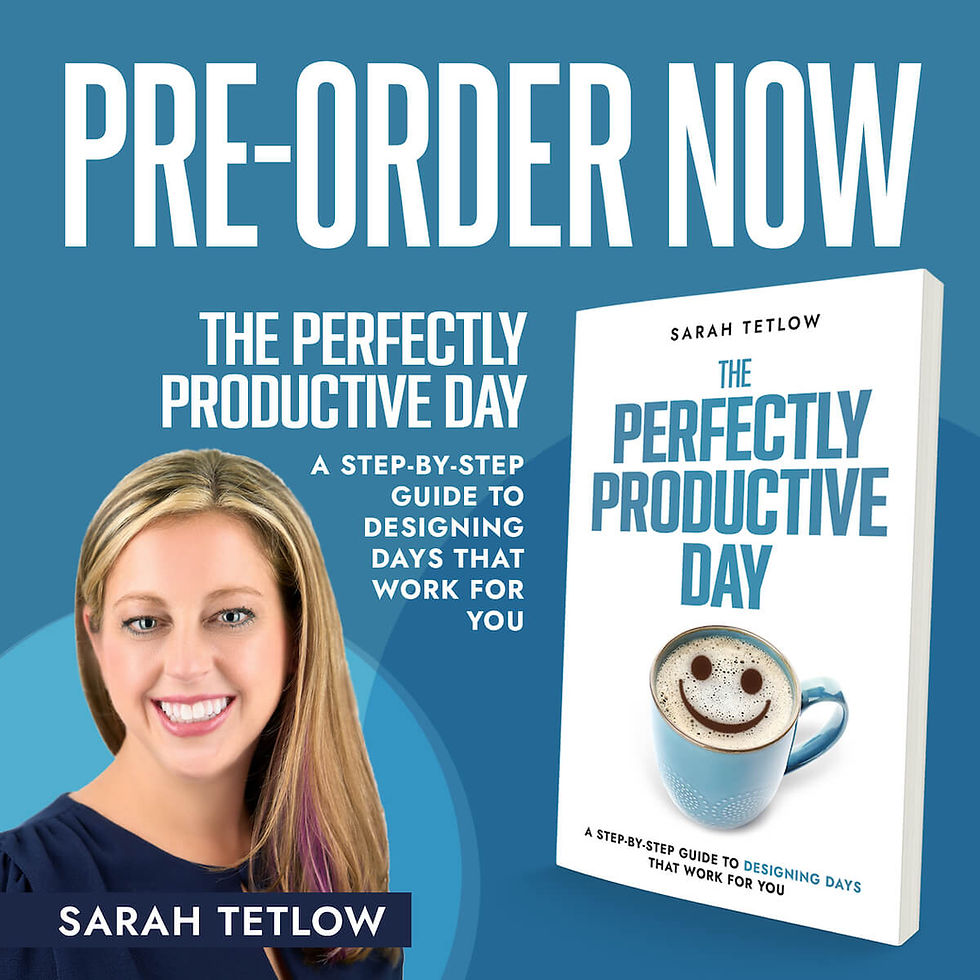
That moment stopped me, because it perfectly illustrates something I talk about in my book The Perfectly Productive Day.
Researchers estimate that adults make up to 35,000 decisions each day, ranging from small, unconscious choices to larger, deliberate ones. While the exact number is debated, studies from Cornell and work by experts like psychologists Daniel Kahneman and Roy Baumeister support the idea that our brains are constantly processing decisions — contributing to mental fatigue and the need for intentional routines.
We don’t experience decision fatigue because of one big decision. We experience it because of the hundreds of tiny ones, stacked back-to-back, all day long.
And the cereal aisle is a perfect micro-example.
When More Choice Becomes Less Freedom
There’s real research behind that overwhelmed feeling. In a well-known study by psychologist Sheena Iyengar and Mark Lepper, shoppers were presented with either 6 jam options or 24 jam options. More people stopped when there were 24 options—but far fewer actually made a purchase. When the choices were limited, people were significantly more likely to decide and feel satisfied.
This phenomenon is often called choice overload.
The brain likes optionality in theory. Yet, in practice, too many options require more mental energy, more evaluation, and more second-guessing.
And that mental cost shows up later.
This aligns closely with the work of Daniel Kahneman, who explained that our brains rely on fast, automatic decision-making systems whenever possible. When we overload those systems, everything starts to feel heavier, even the decisions that should be easy.
It also connects to research by Roy Baumeister, whose work on ego depletion and decision fatigue shows that the more decisions we make, the worse our decision quality becomes over time.
In the grocery store, by the time you decide what cereal to buy, you’ve already made thousands of decisions that day.
Why Mystery Packs Are So Appealing
Now here’s where this gets interesting (and where my 10-year-old accidentally became my research assistant).
If you’ve spent any time around kids lately, you’ve probably noticed how popular “mystery” items are. Mystery packs, mystery boxes, and blind bags. You know there are maybe 10–12 possible things inside, but you don’t know which one you’re getting until you open it.
My son loves them.
At first glance, that seems counterintuitive. Wouldn’t kids want to choose exactly what they’re getting?
But watching him made me realize something important.
The mystery pack does two things at once:
It preserves excitement and novelty.
It removes the burden of choosing.
He doesn’t have to compare all 12 options.
He doesn’t have to worry about picking the “wrong” one.
He doesn’t have to second-guess himself afterward.
The decision is made for him and without taking away the fun.
And I don’t think this is just a kids’ thing.
I think adults are craving the same relief.
The Productivity Parallel
Most professionals don’t struggle because they lack discipline. They struggle because their days are loaded with unnecessary decisions.
What time should I start work today?
Which email should I answer first?
Should I work on this now or later?
What should I eat?
When should I work out?
Do I have time for this today or not?
None of these are hard on their own. Together, they create a constant cognitive drain.
That’s why intentional routines matter so much (and you will learn all about that in the Perfectly Productive Workday section of the book).
When you standardize decisions—morning routines, email processing rules, planning habits—you’re not being rigid. You’re doing what the brain does best: offloading repetitive choices so your energy can be used where it actually matters.
In many ways, a well-designed workday functions like a mystery pack:
The structure is decided in advance.
The energy stays focused.
The brain isn’t stuck evaluating options all day long.
Designing Fewer Decisions Into Your Day
One of the core ideas in The Perfectly Productive Day is this:
Productivity isn’t about doing more. It’s about deciding less.
Fewer decisions about when to start.
Fewer decisions about what comes next.
Fewer decisions about how to handle the predictable parts of your day.
That’s how you protect your attention for the work that truly requires judgment, creativity, and thought.
It isn’t the cereal aisle that needs your best thinking.
On the contrary, your clients do. Your team does. Your priorities do.
So the next time you feel oddly drained by something small, pause and ask:
Is this a decision I could remove, simplify, or pre-decide?
Because sometimes the most productive choice is letting the decision be made before you ever reach the aisle.
If this story resonated, The Perfectly Productive Day goes deeper into how to design days that feel focused instead of frantic without relying on willpower or hustle.
The book walks through practical, repeatable routines that reduce decision fatigue, protect your energy, and help your productivity feel sustainable in real life.
If you’re ready to stop spending your best thinking on cereal-aisle decisions and start using it where it matters most, you can learn more and grab your copy here.
Comments